
UGC Marketing: How Brands Use Creator Videos to Lower CPA
UGC marketing explained: how brands use creator videos in ads to lower CPA, campaign examples, costs, and a 4-week plan to start testing UGC ads.
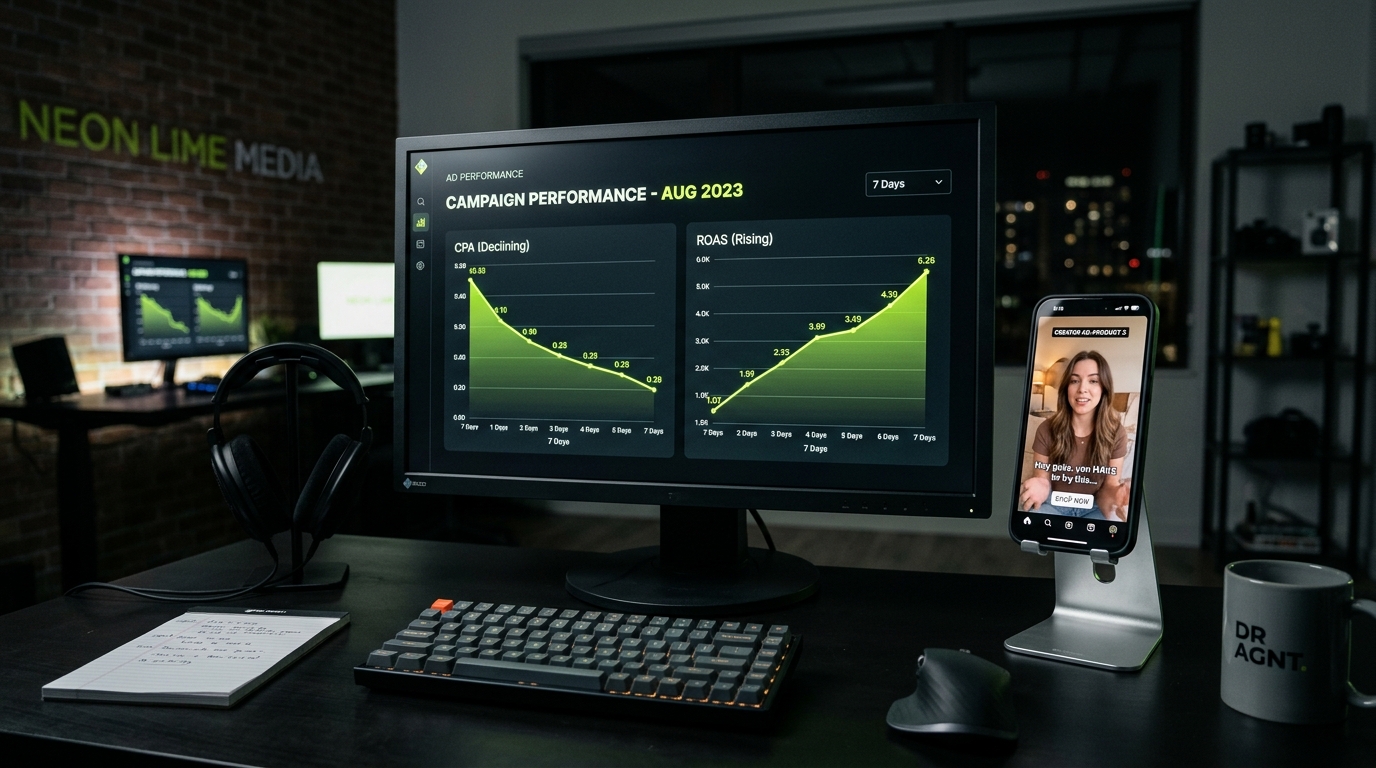
UGC marketing is the use of customer and creator videos in your marketing, mainly as paid ads. It lowers CPA because native-looking videos earn more attention, and because UGC is cheap enough to produce in volume: more ads to test means the platform finds winning angles faster and spends less per sale.
Key Strategic Takeaways:
- The creative is the primary targeting lever in modern machine-learning ad auctions.
- UGC marketing lowers CPA by eliminating the instinctive swipe-away reaction triggered by commercial ads.
- Structure testing around 3 core angles with 3 hook variations each to achieve statistical significance quickly.
UGC marketing is the use of customer and creator videos in your marketing, mainly as paid ads. It lowers CPA because native-looking videos earn more attention, and because UGC is cheap enough to produce in volume: more ads to test means the platform finds winning angles faster and spends less per sale.
How UGC Lowers Cost Per Acquisition (CPA)
When users open Meta, Instagram, or TikTok, their thumbs are conditioned to swipe past anything that looks like a studio ad. UGC bypasses this defense mechanism by matching the visual language of the organic feed.
Because UGC production costs are significantly lower than traditional film shoots, media buyers can launch 10 to 30 variations each month. Algorithmic delivery engines (Meta Advantage+, TikTok Smart Performance) reward accounts with creative diversity, driving down auction CPMs.
The 4-Week UGC Creative Testing Framework
Week 1: Launch 3 distinct angles (e.g. Founder Story, Avatar Frustration, Case Study Metric) with 3 hook variations each.
Week 2: Analyze 3-second hook rate and outbound CTR. Cut the bottom 50% and allocate budget to the top 2 winning hooks.
Week 3: Produce 5 visual iterations of the winning body cut with new sound design, b-roll, and caption typography.
Week 4: Scale the winning combo into lookalike and broad audiences while initiating the next testing batch.
UGC Marketing vs Influencer Marketing vs Traditional Ads
Direct Response Matrix| Creative Lever | Traditional Brand Video | SevenFigureStudio System |
|---|---|---|
| Core Conversion Driver | Follower size & influencer status | Native creative pacing & direct response script |
| Cost Model | $2,000–$20,000+ per post based on vanity metrics | From $35 per video or $700 for 30 monthly assets |
| Testing Agility | Rigid 1-off post with locked contract terms | Rapid weekly angle iterations & hook variants |
| Ad Account Control | Posted only to creator's personal feed | Full commercial usage inside brand ad account |
The Bottom Line
Implementing a systematic UGC marketing pipeline transforms your creative testing from guesswork into an algorithmic science that sustainably lowers customer acquisition costs.
Key Questions Answered
Direct insights on ugc marketing: how brands use creator videos to lower cpa
Keep reading
The 3-Second Hook Rule: 15 Video Hooks That Stopped $50M+ in Ad Spend Scroll
80% of video ad drop-off occurs in the first 3 seconds. Learn the proven direct-response framework that forces high-ticket prospects to stop scrolling and listen.
Direct ResponseWhat Is UGC? User Generated Content for Brands, Explained
What is UGC? User generated content explained for brands: types, examples, UGC vs influencer content, costs and how to turn UGC into ads that convert.