
What Is UGC? User Generated Content for Brands, Explained
What is UGC? User generated content explained for brands: types, examples, UGC vs influencer content, costs and how to turn UGC into ads that convert.
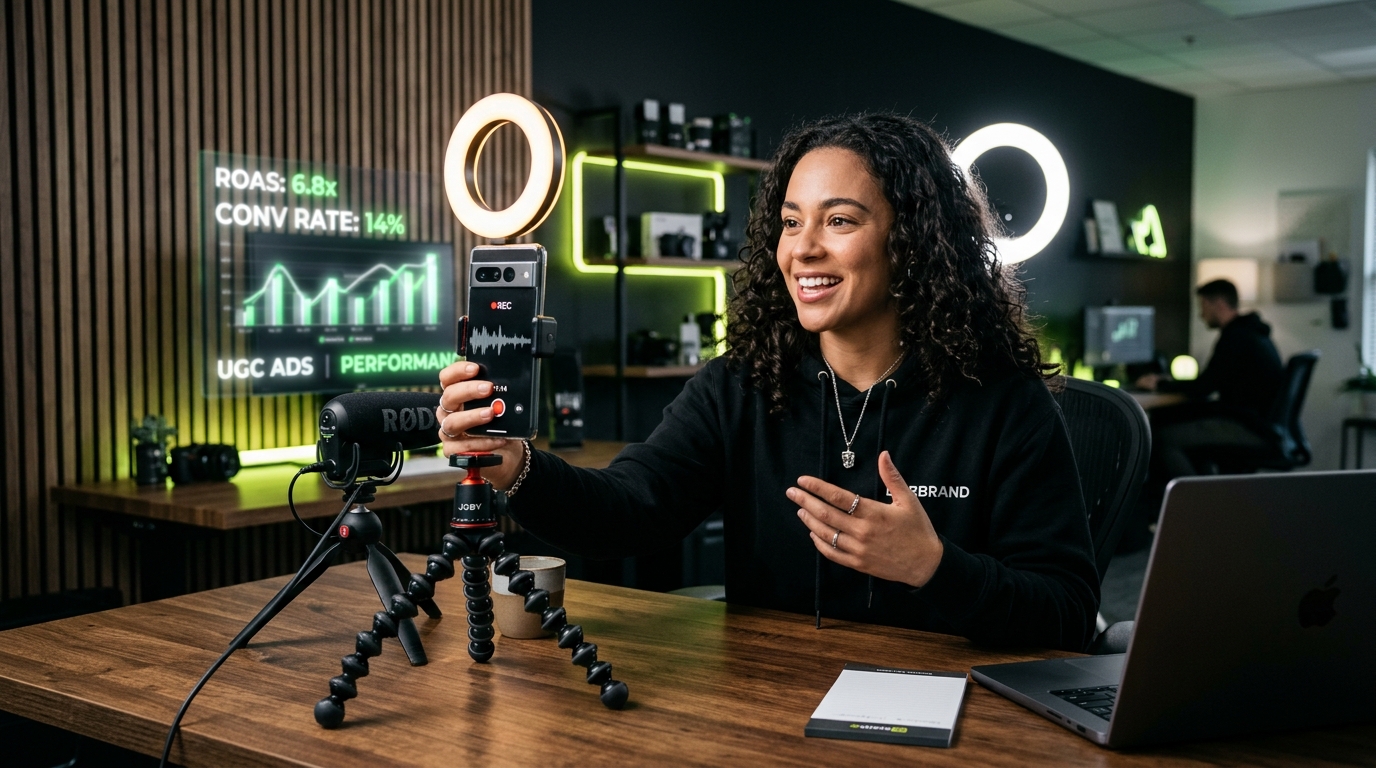
UGC (user generated content) is any content made by real people rather than the brand: reviews, photos, unboxings and talking-to-camera videos. In marketing, UGC usually means short creator videos a brand pays for and runs as ads, because they look native in the feed and feel more trustworthy than polished brand ads.
Key Strategic Takeaways:
- Consumers trust content created by everyday people over slick corporate commercial shoots.
- In paid advertising, UGC delivers lower cost per acquisition (CPA) because it avoids user ad blindness.
- UGC differs fundamentally from influencer marketing: you buy the creative asset and usage rights, not access to the creator's audience.
- High testing volume (10 to 30 assets monthly) is essential for finding winning hooks on Meta and TikTok.
UGC (user generated content) is any content made by real people rather than the brand: reviews, photos, unboxings and talking-to-camera videos. In marketing, UGC usually means short creator videos a brand pays for and runs as ads, because they look native in the feed and feel more trustworthy than polished brand ads.
What is UGC?
At its core, User Generated Content exists in three distinct formats across modern digital marketing:
1. Organic UGC: Unpaid, spontaneous content created by real consumers sharing their authentic experiences, unboxings, and reviews on their personal social media profiles.
2. Paid Creator UGC: Direct-response video assets commissioned by brands from specialized creators who know how to film on smartphones with great lighting, clear audio, and punchy hook delivery.
3. AI UGC: Synthetic avatar video created using generative video and voice tools for fast angle testing and international localization.
What Does UGC Stand For in Marketing?
In commercial marketing, UGC stands for User Generated Content — specifically referring to creator-produced media assets purchased by brands to run inside paid ad campaigns on Meta (Facebook & Instagram), TikTok, and YouTube Shorts.
Unlike traditional commercial shoots that feature actors on film sets with high-end camera rigs, marketing UGC is intentionally produced with smartphones to match the native look, feel, and aspect ratio (9:16) of organic social media posts.
This native aesthetic is why UGC generates up to 4x higher click-through rates (CTR) and 30-50% lower cost-per-acquisition (CPA) compared to traditional glossy brand commercials.
UGC Video Meaning: How Video Ads Differ From Static UGC
While UGC began as static customer photos and written review screenshots, modern performance advertising is heavily dominated by UGC video ads.
A UGC video is a 15 to 45-second direct-response video asset that follows a structured conversion formula: an opening thumbstop hook in the first 2 seconds, a problem agitation sequence, the product demonstration or coaching mechanism, social proof, and a clear call to action.
Algorithmic ad platforms favor video assets because they keep users on the platform longer, giving UGC video ads cheaper CPMs and significantly broader organic reach.
5 Core Types of High-Converting UGC Content
Not all UGC looks or acts the same. High-converting brands deploy a blend of 5 proven formats:
• Problem & Solution: Creator starts with a painful daily frustration and introduces the product or service as the turning point.
• Testimonial / Story: Candid transformation breakdown explaining how a coach, agency, or product resolved a high-stakes bottleneck.
• Feature & UI Demo: Over-the-shoulder screen recording or product handling showing how the product works in real time.
• Unboxing & Reaction: First-impression excitement highlighting packaging quality, sensory details, and immediate satisfaction.
• Day in the Life: Lifestyle integration showing how the service or product naturally fits into a busy daily routine.
How Much Does UGC Cost?
Pricing for UGC varies depending on whether you source raw clips directly from marketplaces or purchase done-for-you edited assets from a specialized studio:
Freelance creators typically charge between $100 and $300 for raw phone footage, plus additional fees for paid usage rights, editing, and revision rounds.
By contrast, Seven Figure Studio provides complete done-for-you UGC video ads starting at $35 per video, $290 for 10 videos, or $700 for a 30-video monthly scaling pack with scripting, editing, subtitles, and 3 revisions included.
UGC vs Influencer Content vs Brand Generated Content
Direct Response Matrix| Creative Lever | Traditional Brand Video | SevenFigureStudio System |
|---|---|---|
| Primary Goal | Reach follower audience (Influencer) | Direct conversions & CPA reduction (UGC Ads) |
| Where It Runs | Influencer's personal profile feed | Brand's paid ad account (Meta, TikTok, Shorts) |
| Cost Model | $1,000–$25,000+ based on follower size | $25–$75 per video or studio packs from $35 |
| Usage Rights | Limited 30-day organic or extra licensing fees | Full commercial paid advertising rights included |
The Bottom Line
UGC is not a trend — it is the permanent default aesthetic of social media advertising. Brands that replace polished corporate pitches with authentic, creator-led direct response ads consistently achieve lower CPAs, higher retention, and predictable scaling.
Key Questions Answered
Direct insights on what is ugc? user generated content for brands, explained
Keep reading
The 3-Second Hook Rule: 15 Video Hooks That Stopped $50M+ in Ad Spend Scroll
80% of video ad drop-off occurs in the first 3 seconds. Learn the proven direct-response framework that forces high-ticket prospects to stop scrolling and listen.
Scaling & StrategyUGC Marketing: How Brands Use Creator Videos to Lower CPA
UGC marketing explained: how brands use creator videos in ads to lower CPA, campaign examples, costs, and a 4-week plan to start testing UGC ads.